The Hands and Faces of Morocco
Story by Merve Sertoglu
Morocco was one of those countries that had been on my list for years. I had always wanted to experience its cities, landscapes, people, colors, and culture for myself. Over the years, Morocco has become a special part of our Photo Workshop Adventures calendar, and each time we return, there is something new to discover.
What continues to touch me most about Morocco is its people. There is something beautifully unfiltered about the way everyday life remains visible here. People work with their hands, make things, cook, trade, repair, carry, weave, bake, and create as part of their ordinary lives. Many of the scenes that may feel extraordinary to us as photographers are simply everyday moments for the people who live them.
Coming from Türkiye, I recognize the warmth and hospitality of Moroccan people—an openness and generosity that reminds me of home. At the same time, Morocco is completely its own world. It is a country where we can move from mountains to the Atlantic Ocean, from ancient medinas to modern streets, from crowded markets to the silence of the Sahara.
Our photography journey takes us through many different regions of the country, allowing each destination to offer a completely different visual experience. Along the way, we photograph landscapes and architecture, but the people, traditions, and everyday moments are what give Morocco its character.
Fez: Getting Lost in a Living Medina
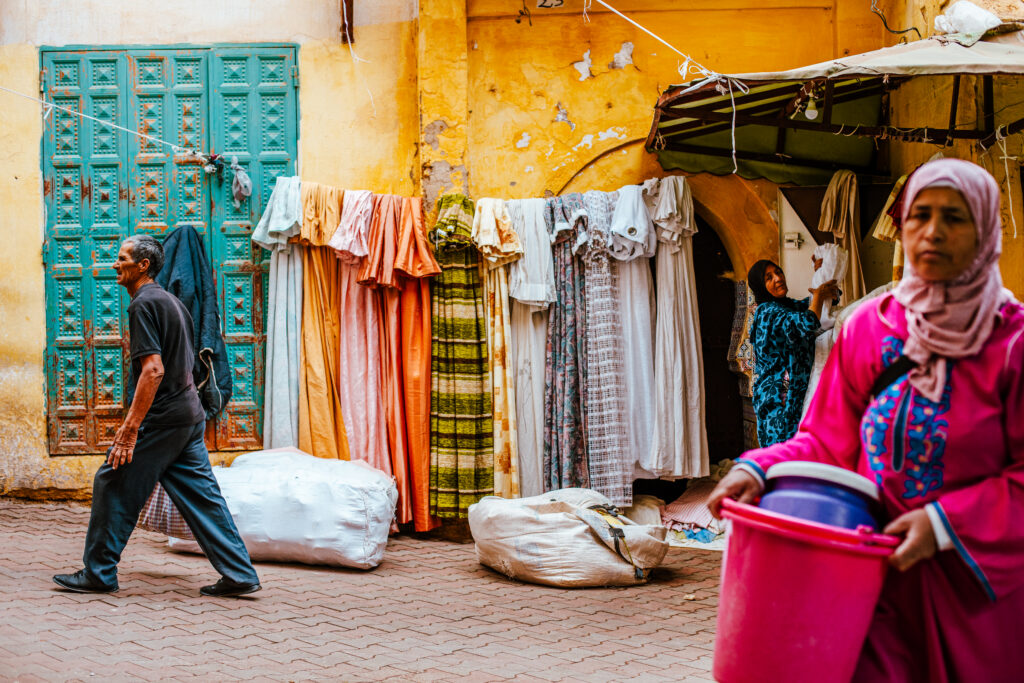
Fez is one of the places where I most enjoy simply getting lost. We begin by photographing the architecture and the beautiful riad where we stay, taking time to appreciate the details that make Fez so visually distinctive. Then we step into the medina and let the city guide us.
The narrow streets of Fez’s medina, one of the oldest in the world, feel like a living labyrinth. Founded more than 1,200 years ago, it is filled with people, street markets, food, spices, fruit, old doors, textured walls, mosques, craftsmen, and the constant movement of everyday life. Fez still feels like a small civilization living within its own rhythm.
Here, traditional craftsmanship is not something preserved only for visitors. It is still part of daily life. We photograph artisans working with metal, weaving carpets, making ceramics, preparing food, and creating objects by hand.
And then there are the smells. The spices, bread, fruit, leather, food, coffee, and countless aromas that waft through the narrow streets become part of the photographic experience. Photography is not only visual in Fez; it becomes a visceral experience.
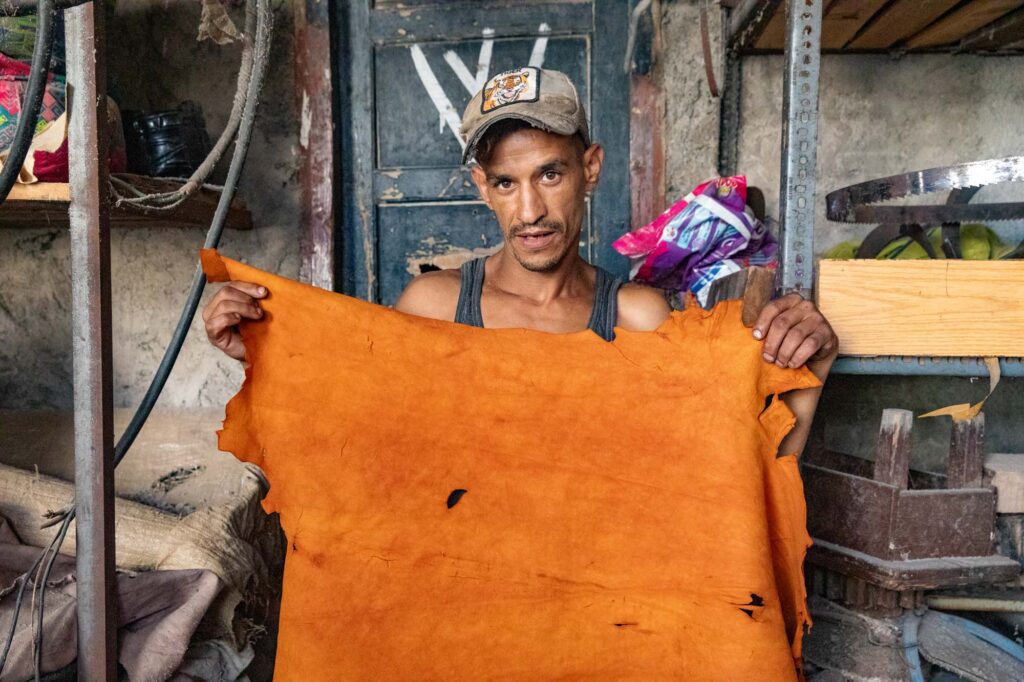
One of the places we visit is the famous tannery, where leather has been processed using traditional methods for generations. It is an opportunity to photograph a centuries-old craft that is still alive today.
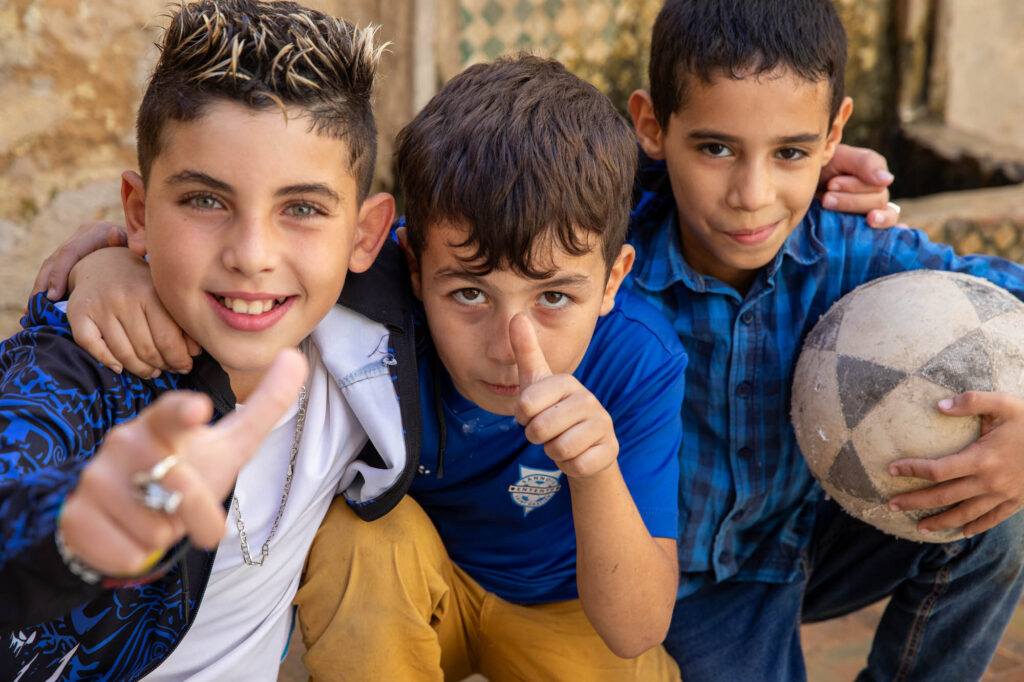
I especially love photographing the children of Fez. I have photographed children carrying bread from their mothers to the local ovens, running through the narrow streets, playing, and simply being themselves. These moments are often among my favorite photographs because they are natural glimpses into everyday life.
Photographing People With Respect
People are at the heart of our experience in Morocco, and photographing them begins with respect. When making a close portrait, asking permission is essential. We like to show people the photograph afterwards, and whenever possible, we love having their photographs printed and bringing them back on a future visit.
There is something very special about handing someone a photograph of themselves. Over the years, I have returned to Morocco carrying prints for people I photographed on previous trips. Seeing their reactions—and sometimes seeing the same people again after several years—has created connections that go far beyond photography.
A photograph can become a small bridge between two people who might otherwise never have met.
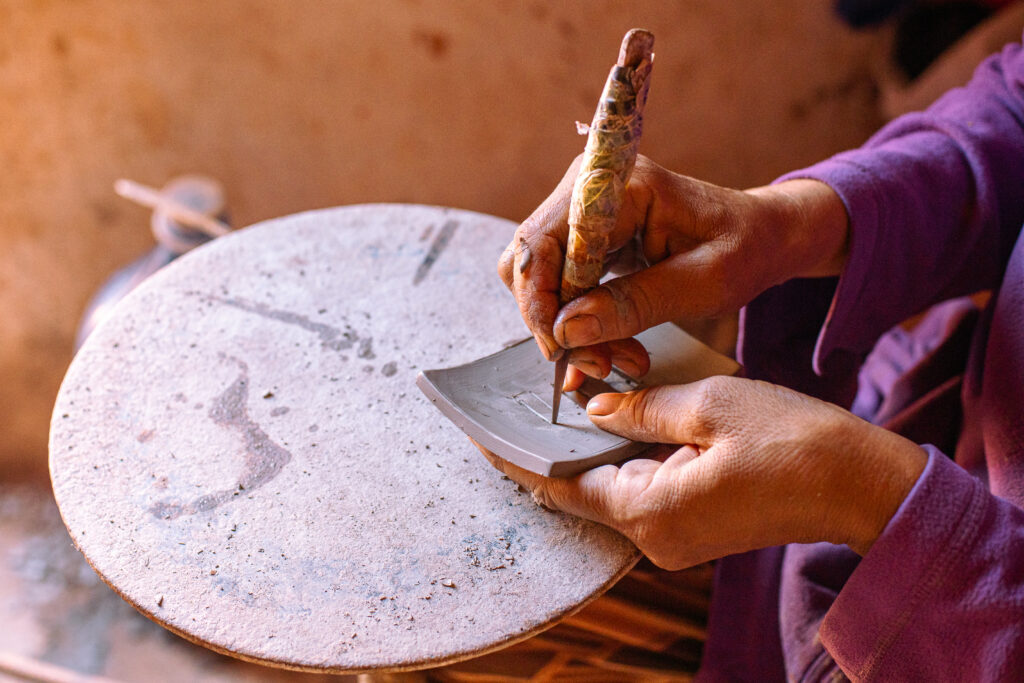
If someone prefers not to have their face photographed, there are still many ways to tell their story. We can photograph their hands—the hands that are working, creating, cooking, weaving, shaping, or carrying something. In many ways, those hands tell their own story, revealing the skill and tradition behind everyday life.
Chefchaouen: A World of Blue
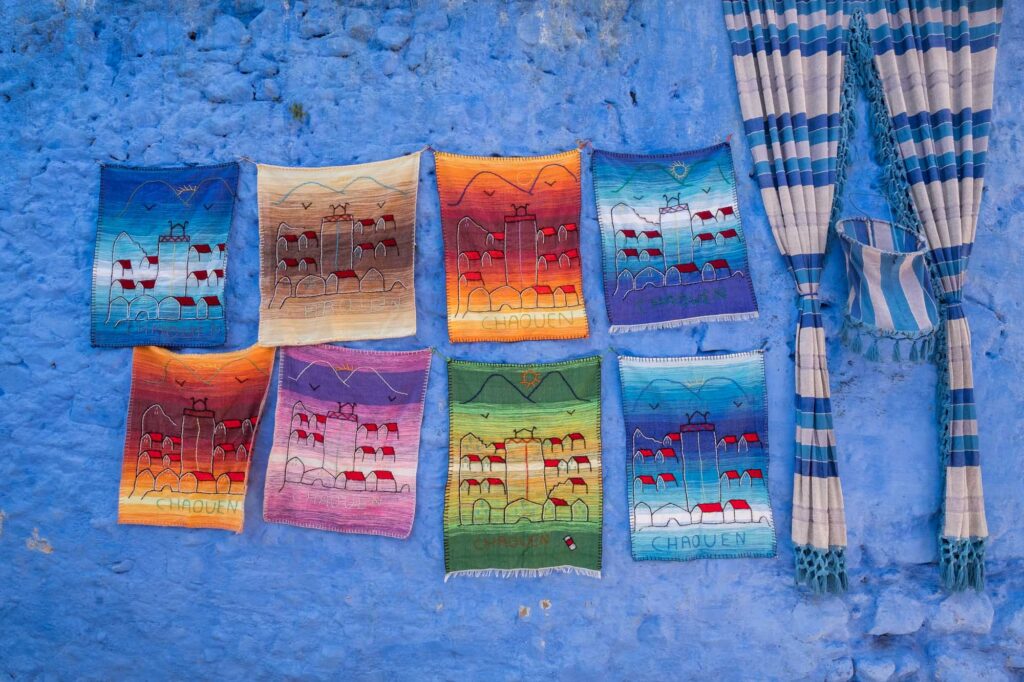
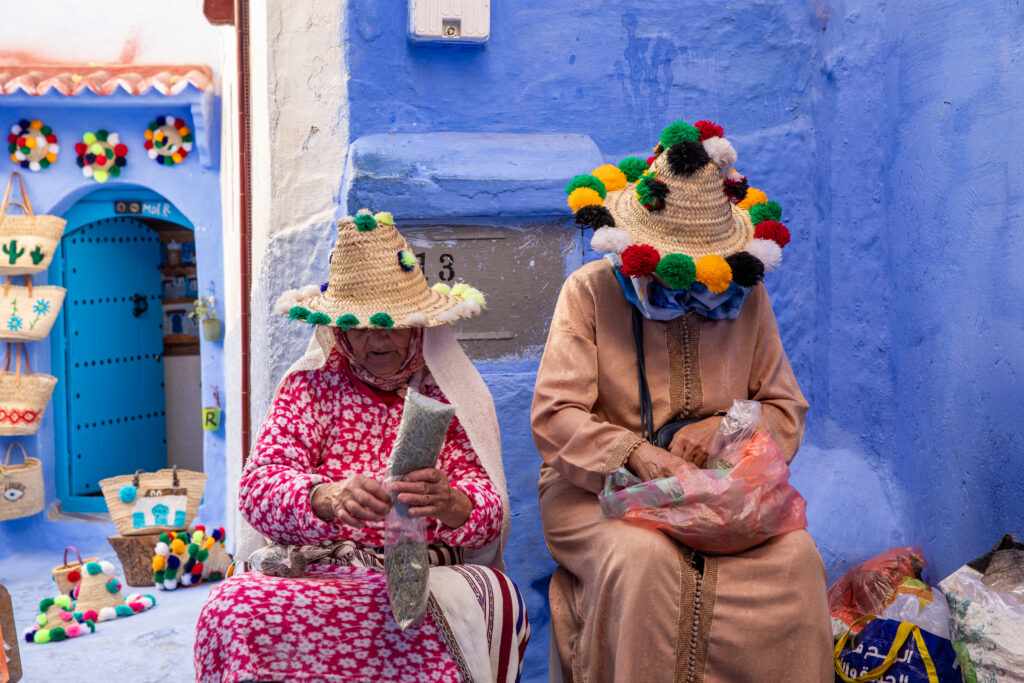
Then we arrive in Chefchaouen, where the visual language changes completely. Blue walls, blue doors, blue streets, and the changing light create an entirely different photographic experience.
But the story is not simply the color. It is the people who live among it.
We look for bakers and ovens, freshly baked bread, elderly residents sitting in the streets, children moving through the blue alleys, and the small details of everyday life that give the city its character. The surrounding landscape also gives us opportunities to step back and photograph Chefchaouen from a different perspective, allowing the blue city to become part of a larger landscape.
Safi: Markets, Coffee and Hands at Work
Safi offers another change of rhythm. Here we explore markets and local shops, photographing the movement of everyday commerce and the people who make these places feel alive.
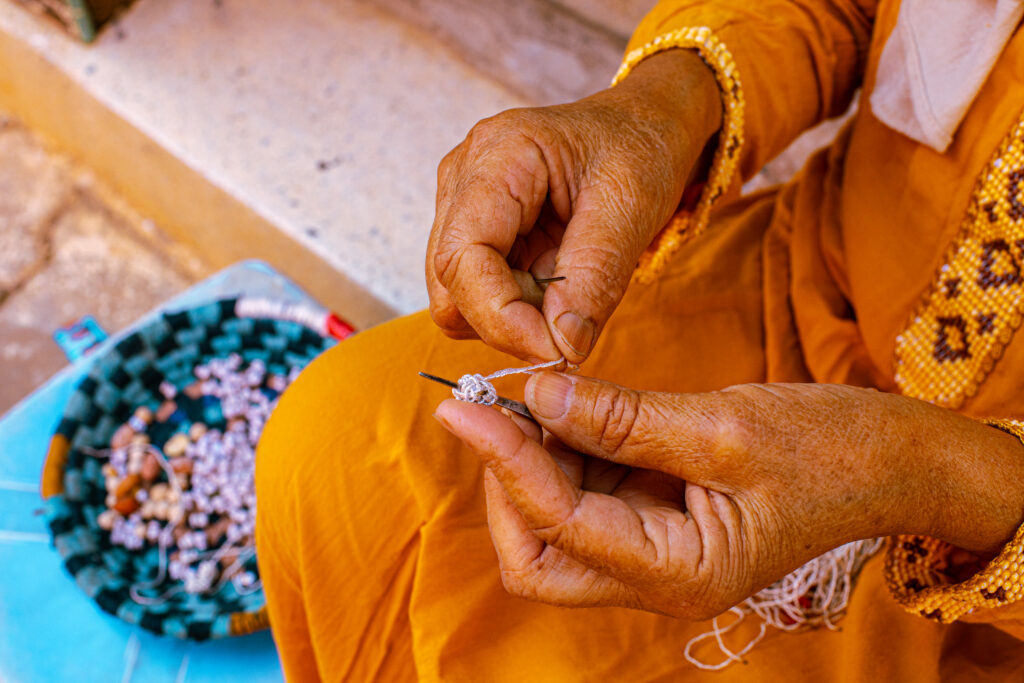
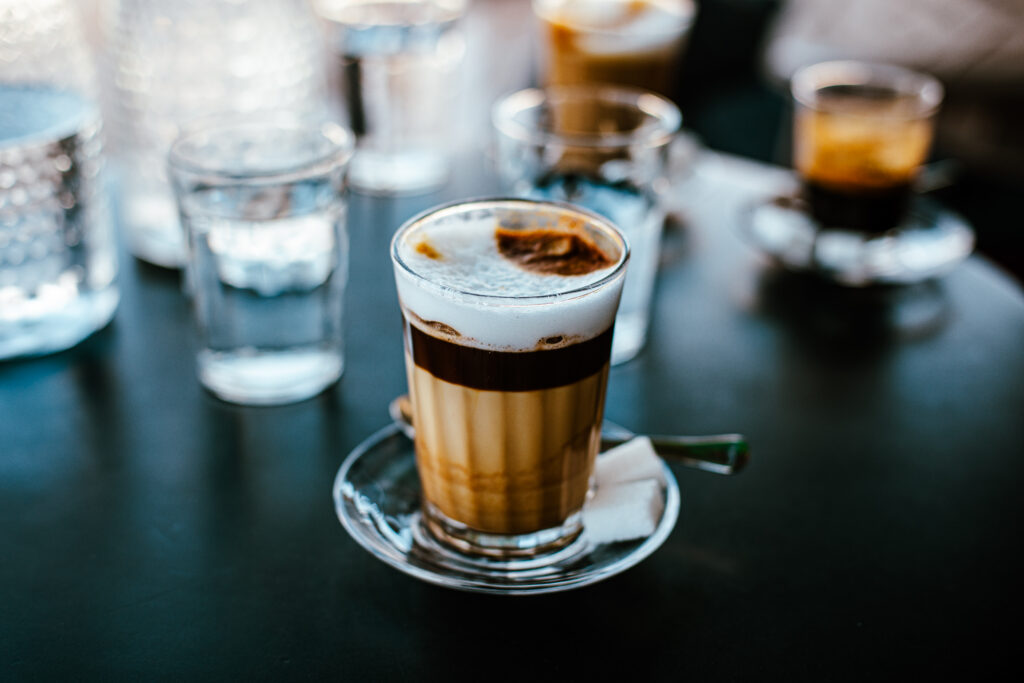
Even something as simple as a glass of nus-nus coffee can become part of the story. We also look closely at craftsmanship, including the delicate work of stringing beads. Once again, the details draw us in: fingers moving, repeating small movements, creating something piece by piece.
These are the kinds of photographs that show us not only what Morocco looks like, but how people live and work.
El Jadida: Light, Shadows and Craft
Set on Morocco’s Atlantic coast, El Jadida is a former Portuguese fortress town that adds a distinctive coastal perspective to our itinerary.
Here, architecture and light become particularly important. The old fortress creates wonderful opportunities for photographing strong contrasts between sunlight and deep shadows. Sometimes we are simply waiting for the right person to walk into the frame and complete the photograph.
If we are lucky, we may also encounter traditional horse racing, another completely different visual experience full of movement, energy, and anticipation.
We then return to craftsmanship and food—photographing ceramic making and the preparation of traditional tagines. Again, the story is in the hands: shaping clay, preparing ingredients, stirring, cooking, and serving.
Essaouira: The Atlantic and the Hands of the Coast
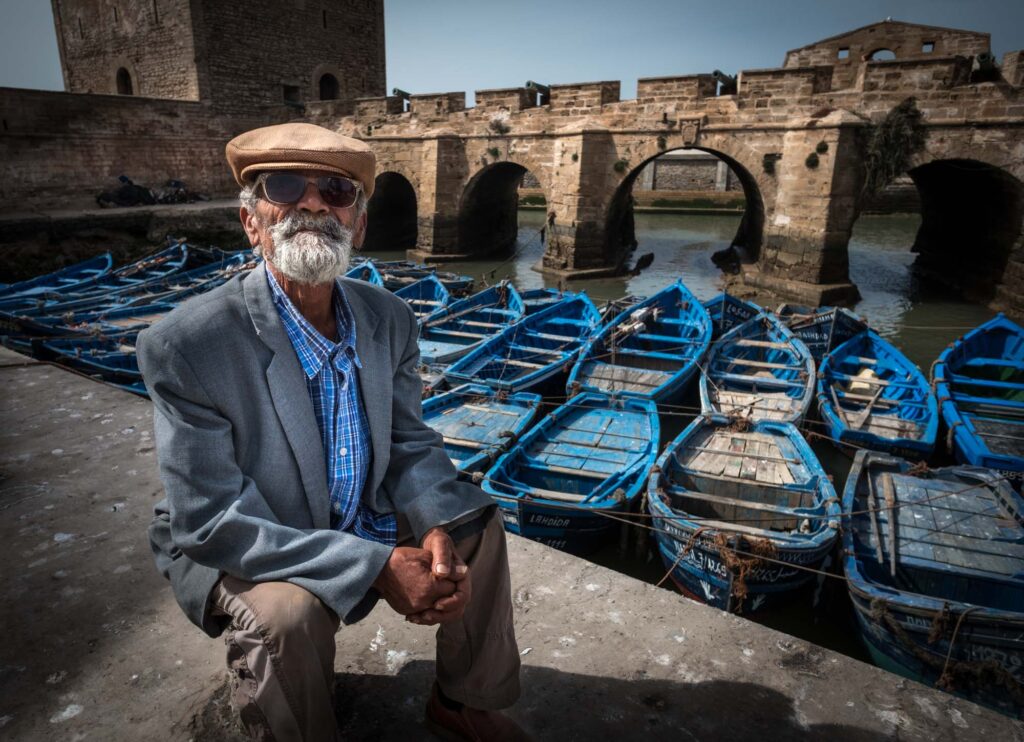
Essaouira brings us to the Atlantic, changing the atmosphere of the journey once again. Here we photograph fishermen, boats, markets, movement along the waterfront, and the constantly changing light.
Sunset is one of the moments I especially look forward to in Essaouira. The Atlantic light can transform the entire scene, turning fishermen, boats, people, and architecture into silhouettes and layers of color.
There are also wonderfully unexpected moments in Morocco, like the famous goats climbing the argan trees. We photograph argan oil production as well, observing the traditional process and the remarkable way people use their hands to separate, prepare, and process the fruit.
We may also photograph women weaving rugs, fingers moving through threads and patterns. These details connect the landscape, culture, and people through the things they create.
Marrakech: Chaos, Sound and Movement
Marrakech is different again. If Fez invites us to slow down and get lost, Marrakech pulls us into its energy. There is sound everywhere—music, movement, markets, people, performers, animals, scooters, conversations, and constantly changing scenes.
This is a place where we love working with movement. We look for gestures, layers, fleeting moments, and photographs where several things come together in one frame. Musicians, street performers, vendors, and everyday interactions provide endless opportunities to observe and photograph.
And, of course, there is coffee. There is always time for coffee.
Sometimes photography means walking and reacting instinctively. Other times, it means sitting down, drinking a coffee, and watching the world pass in front of you. Both are part of the experience.
Morocco in Color and Light
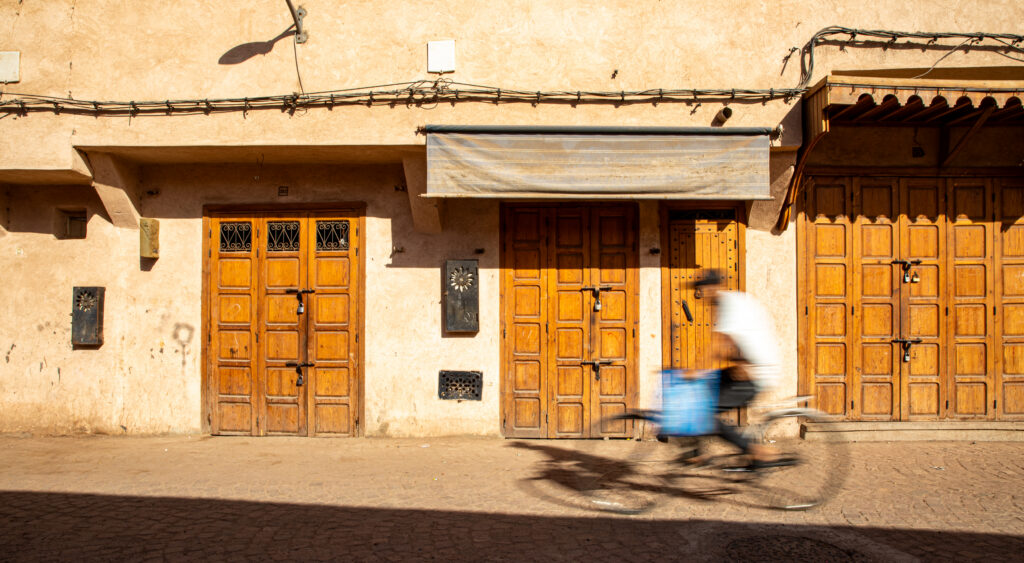
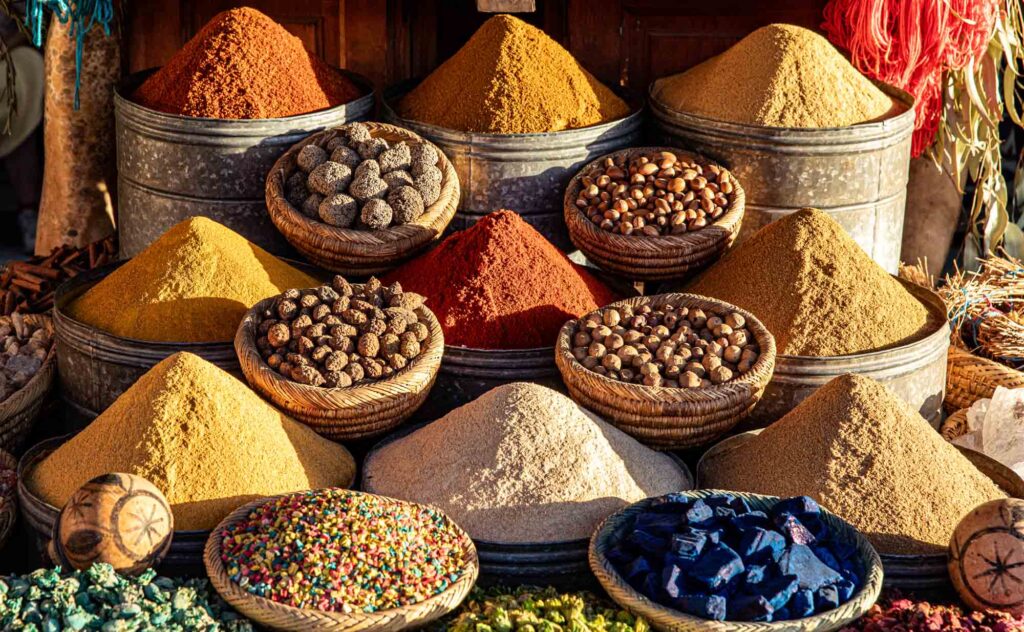
Morocco is often described through its colors, but for us, the colors are only the beginning. There are earthy oranges, browns, yellows, terracotta, faded blues, and the colors of fabrics and markets. They appear naturally in walls, clothing, food, architecture, landscapes, and people’s faces.
Light brings all of these colors to life. Throughout our workshops, we look at how light falls through a doorway, creates shadows on an old wall, separates a person from a background, or changes the feeling of an entire street.
We photograph doors, walls, textures, markets, architecture, craftsmen, mountains, roads, the ocean, and the smallest details inside homes. There is an enormous richness in Morocco when we take the time to look closely.
From the Cities to the Sahara
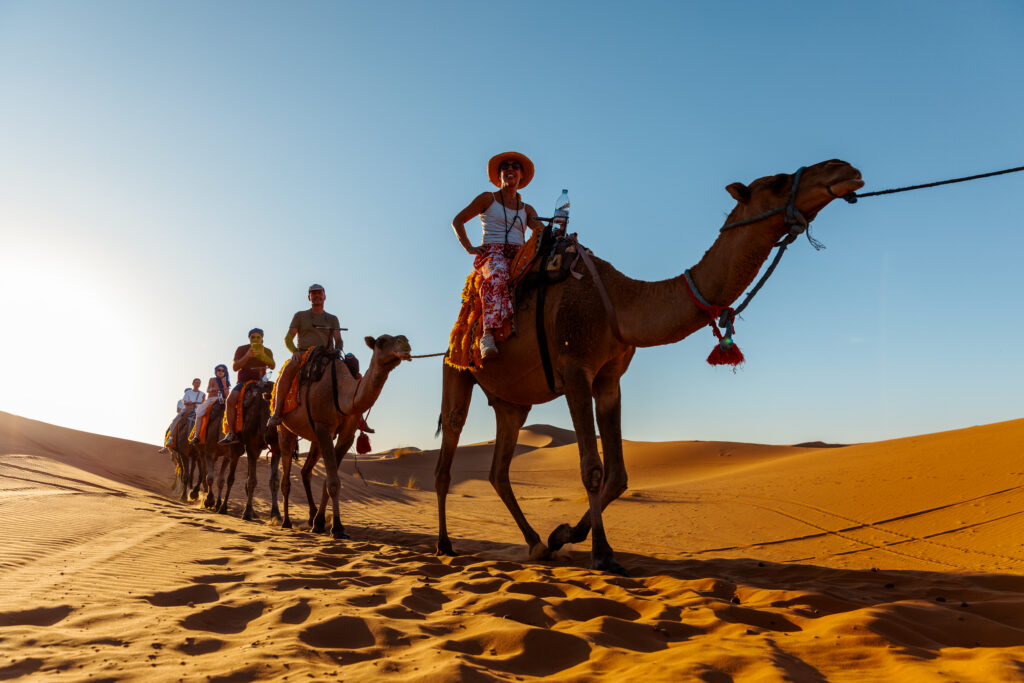
As we gradually make our way toward the Sahara, the rhythm of the journey changes. After the narrow streets, sounds, smells, markets, and movement of Morocco’s cities, the landscape begins to open. Mountains, valleys, trees, and greenery slowly give way to the vastness of the desert.
We begin our desert photography around sunset, photographing camel caravans, people traveling through the dunes, desert guides, and the long shadows created by the final light of the day. As the sun disappears, the dunes change color and the landscape becomes wonderfully quiet.
The next morning, we wake before sunrise and wait for the first light. Sometimes we travel by camel again, sometimes we simply find a good position among the dunes and wait. Watching the sun rise over the Sahara and seeing the light slowly move across the sand is an experience that stays with you.
After days of movement and visual information, the desert offers something completely different: space, silence, distance, and horizon.
More Than Taking Photographs
For us, traveling to Morocco is about much more than taking photographs. It is about experiencing the country, understanding where we are, learning something about its history and culture, and creating connections along the way.
We encourage photographers to look beyond the photograph—to learn a little about the history of a place, understand why a medina looks the way it does, discover why a particular craft has survived, and notice the people who keep these traditions alive.
Photography becomes more meaningful when we understand something about the world in front of our camera.
This is also what makes a photography workshop special. We don’t all see the same thing. During our trips, we talk about photographs, look at each other’s images, share what caught our attention, and discover how differently another photographer may interpret exactly the same scene.
One person may notice a gesture, another may find a different angle, while someone else may photograph a quiet detail that everyone else walked past. We learn from each other, and Morocco gives us an extraordinary place in which to do that.
Returning to Morocco
One of the reasons we love returning to Morocco is that the country never feels exactly the same. People continue living their lives, children grow up, places change, markets evolve, and traditions continue.
Returning also gives us the chance to reconnect with people we have photographed before. Seeing a familiar face years later or watching someone continue the same craft with their hands creates a beautiful sense of continuity.
This is when photography becomes more than an image. It becomes a record of time, a memory, a relationship, and a connection between visits.
We feel incredibly fortunate to return to Morocco year after year and to introduce photographers to people and places that have become an important part of our relationship with the country.
We don’t want photographers to come to Morocco simply to collect beautiful photographs. We want them to experience the country—to walk through its medinas, listen to its sounds, smell its markets, watch people work with their hands, sit down for a coffee, share a photograph, get lost, slow down, watch the light change, and sit quietly in the Sahara.
Most importantly, we want them to leave with photographs that mean something because of the experience behind them.
If Morocco has been calling you, we hope you will join us on one of our next Photo Workshop Adventures. Come for the photographs. Stay for the people. And leave with a story of your own.