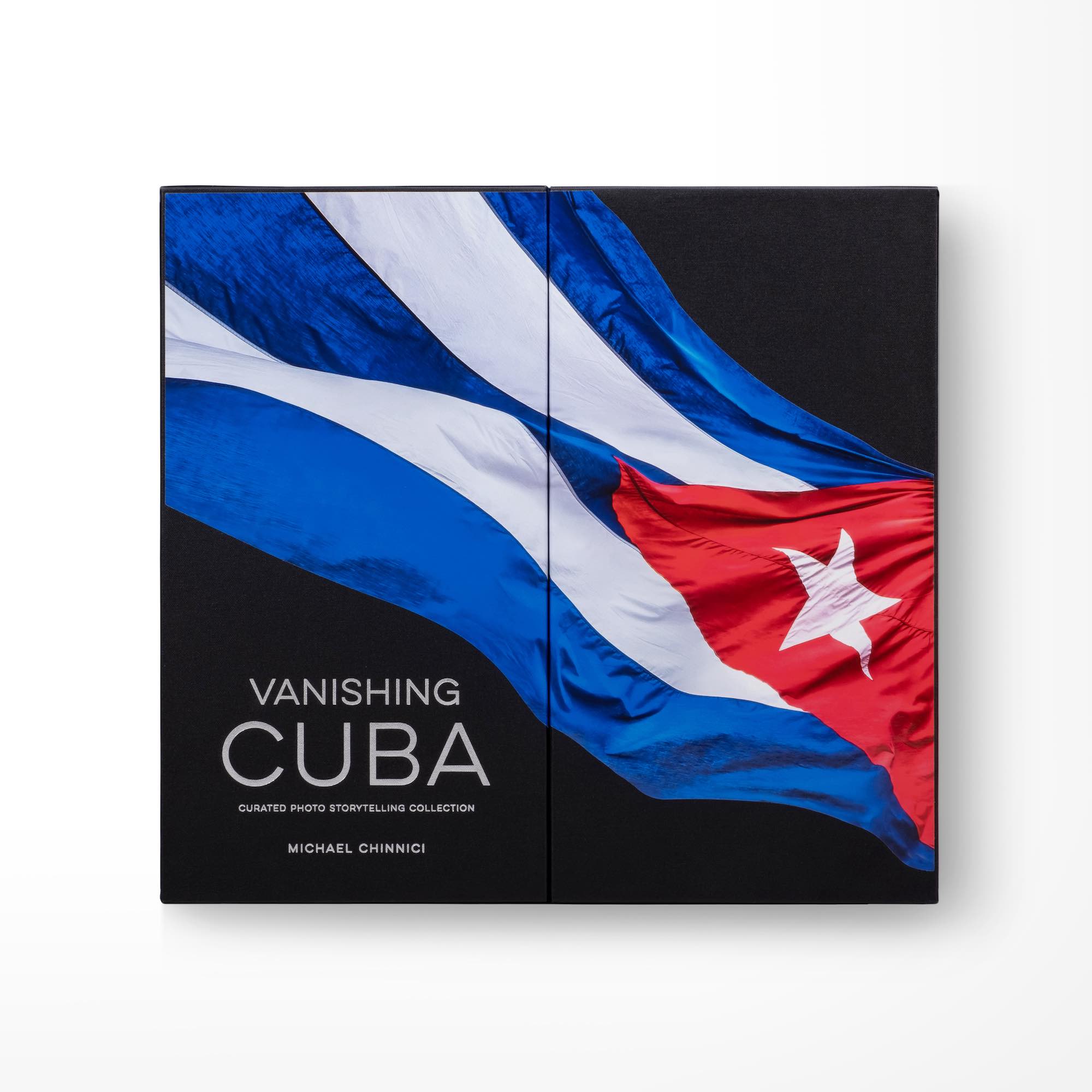
Greece – An Experiment in Color
Story by Laurie Cohen
When one thinks of Greece, you may be forgiven for thinking only of whitewashed houses, bluedomed churches, and islands surrounded by an endless deep blue sea. While those iconic postcard scenes immediately come to mind, the variety of colors found in the Greek Isles are some of the most vivid, vibrant and saturated found anywhere in the world.
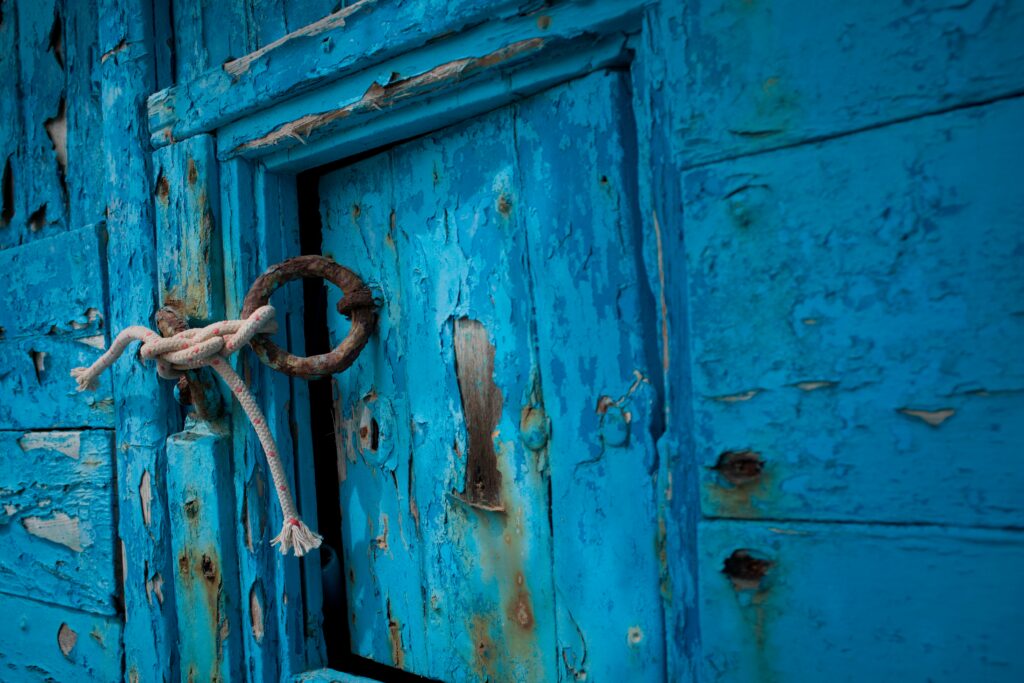
Instantly recognizable by its iconic colors of blue and white: Blue mirroring the deep blue sky and the sparkling Aegean Sea, while white evokes the island’s charming whitewashed buildings, reflecting purity. These colors also appear on the Greek flag, symbolizing freedom and the nation’s deep connection to the sea.
In nature, Greece bursts with rich, earthy tones: Sun-drenched ochres, ancient groves of olive trees, and vibrant colors of bougainvillea flora contrasting with the stark white architecture.
Surrounding the beautiful islands, colors of the Aegean Sea range from deep blue, where calderas of endless depth created by exploding volcanos, to emerald green found in the shallow waters surrounding pristine islands, add to the overall natural beauty of the Greek Isles.
The stark colors of Greece invite photographers to explore a diverse visual feast, reflected in its history, landscapes and lively spirit. If it’s wandering through the urban decay of Athens, or sailing around some of the country’s 6,000 islands, the colors found in nature can be as equally stunning as the vivid paint used to decorate homes, boats, churches and boat houses.
It is these colors that create opportunities for stunning images for photographers. Used as a way to create compositions, become a focal point or to compliment a scene by adding context, color enhances the beautiful scenes like no other tool for the photographer.
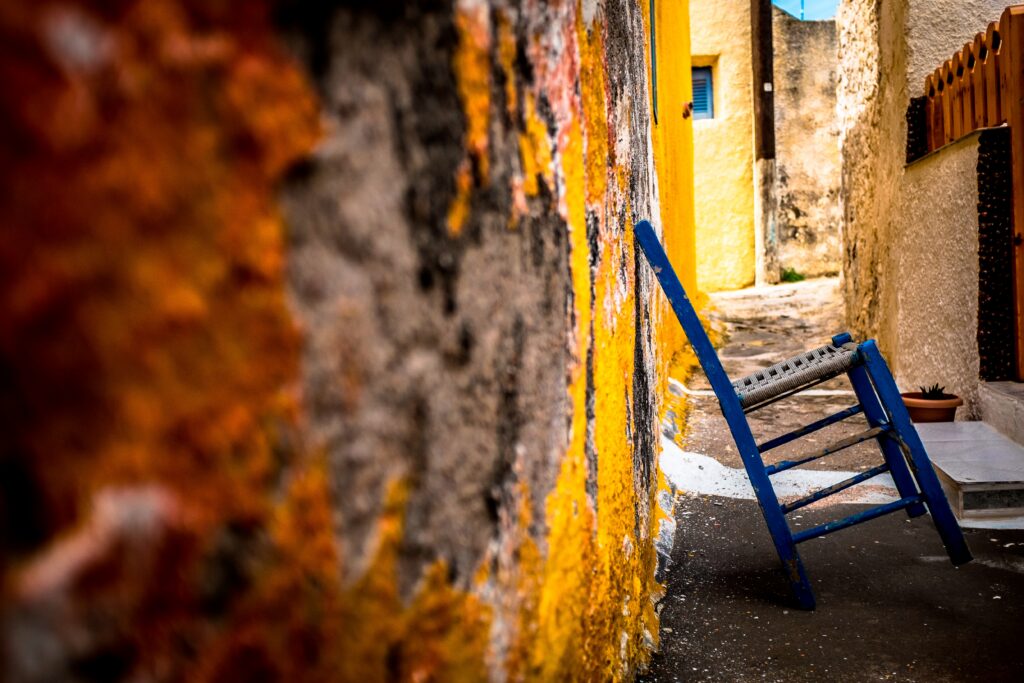
The locals of Greece carefully and lovingly beautify their property with layers of bright colored paint, however some of the most photogenic scenes are found on the facades of abandoned houses, where time, salt content in the air, and the weather takes its toll.
The result is often buildings left with more character in beautiful tones, textures and hues of color as the inevitable decay sets in. Traditionally, lime-based whitewash was used for its natural disinfectant properties and ability to keep buildings cool during hot summers. Over time, artisans added bright colors such as cobalt blue, deep yellows and crisp reds resulting in neighborhoods that pop with a vibrant energy.
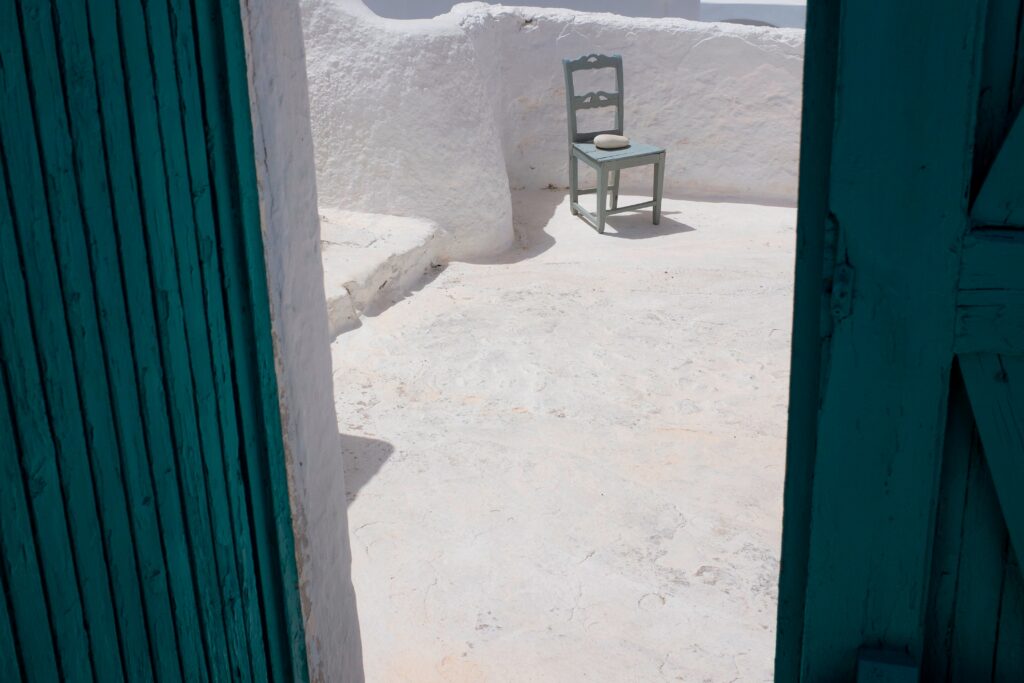
In Greece, bright, colorful paint is more than decoration – it’s a celebration of light, life and culture wrapped in every brushstroke. Known for the pure air quality and lack of haze extending into the atmosphere, the Greek islands glow when these stark colors are thrown into the mix.
One of our favorite destinations for photographing architecture, landscapes and seascapes, Santorini is iconic for its contrast of white-washed cave houses set into dark, volcanic rock, perched along the sides of a dormant volcano. The world renowned sunsets displayed here are quite simply, stunning.
Santorini has a curious mix of minimalist architecture of monochromatic colors, quaint traditional fishing boats painted in bright primary colors, and details of homes decorated in pastel shades.
Oia is known for the iconic blue-domed churches that perch precariously over the caldera, and offer countless photo opportunities as the light changes. This location also draws crowds of visitors to witness the glorious sunsets, though sunrise is equally beautiful to capture.
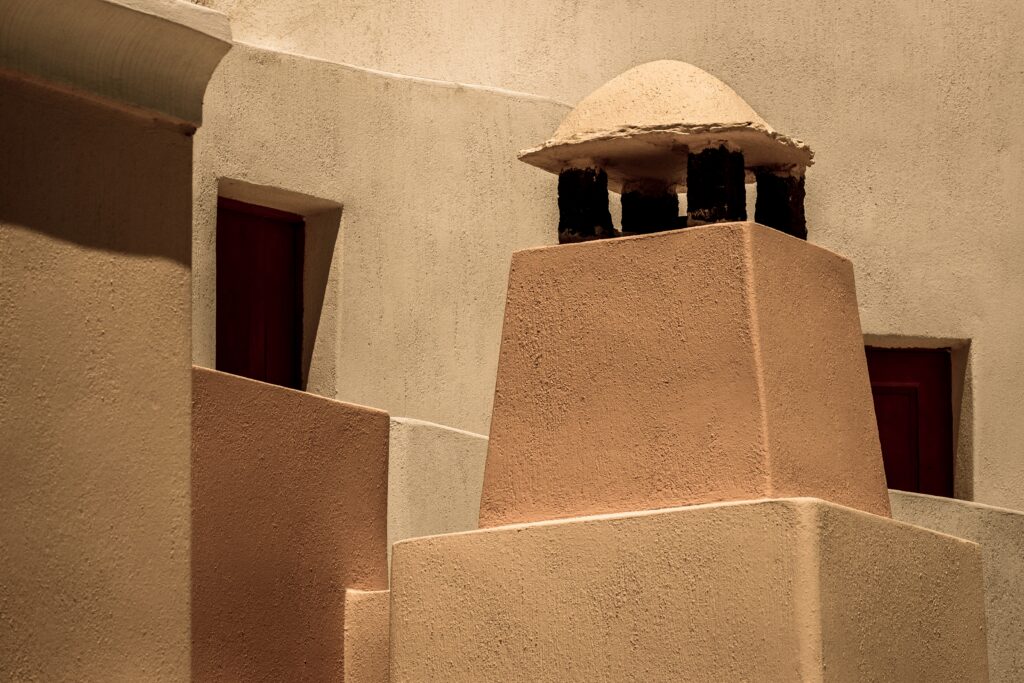
Another hilltop village of note in Santorini is Imerovigli. An excellent location for minimalist type photography, the subtle tones and colors of the chic cave hotels perfectly blend in with the beautiful views over the Aegean Sea.
Imerovigli is a popular village for honeymooners due to its quiet, peaceful character. The stunning attention to detail on every surface means that photographing textures, tones and repeating patterns here is a delight. You will be hard pressed to find a sharp edge or right angle anywhere.
South of Imerovigli, lies the vibrant town of Fira – the island’s capital. Color is abundant here, as are the shoppers, young party-goers and a variety of dining options.
Fira is a popular location for honeymooners that bring extravagant clothing from back home to be photographed in bright, vivid colors amongst the beautiful surroundings. It is a labyrinth of narrow, winding streets of whitewashed cave homes and hotels, dotted with splashes of vivid colors, and is the quintessential Greek island image.
For those seeking the most vivid, saturated colors where brushstrokes of bright, glossy paint are still dripping wet, the boathouses of Klima on the island of Milos are hard to beat. This colorful fishing village is famous for its Syrmata – the two-story boathouses that sit right on the water’s edge. Klima is one of the most photogenic spots in all of Greece.

Mastering color theory in your photography can be achieved when you become familiar with the color wheel. This is important in understanding the relationship between colors to create mood, direct the viewers eye, and build visual harmony.
- Complimentary Colors: Pairing colors that sit opposite each other on the color wheel [for example blue and orange, or red and green] will create eye-catching, high contrast images.
- Analogous Colors: Using colors that sit next to each other on the wheel [such as blue, aqua and green] give a calm, unified look.
- Monochromatic Colors: Shoot variations in tone, shade, and saturation of a single hue builds a clean, sophisticated mood.

Our next Greece Photo Workshop runs on May 13-21, 2027. Locations on our itinerary include Athens, Santorini and Milos. Join us and discover the rich colors on offer, and how to utilize them in your own photography.