Camargue: Where The Wild Still Runs Free
When most people think about southern France, they probably picture Provence, the Côte d’Azur, lavender fields, Mediterranean villages, and long afternoons spent beside the sea. But there is another side of southern France that feels quite different. Down in the Rhône delta, where rivers, wetlands, salt marshes, and the Mediterranean come together, you’ll find the Camargue.
The Camargue is one of those places where the landscape seems to have its own personality. It is wide and open, with very little getting in the way of the horizon. White horses move through the marshes, black bulls roam the countryside, and thousands of flamingos gather in the wetlands. Then, rising from this very flat landscape, you find the medieval walls of Aigues-Mortes and the colorful salt ponds that have been part of the region for generations.
For photographers, there is a lot to explore here. You can spend one part of the day photographing wildlife and another walking through a medieval town. You can work on fast-moving action with the horses and bulls, then slow things down and look for reflections, patterns, and color around the saltworks.
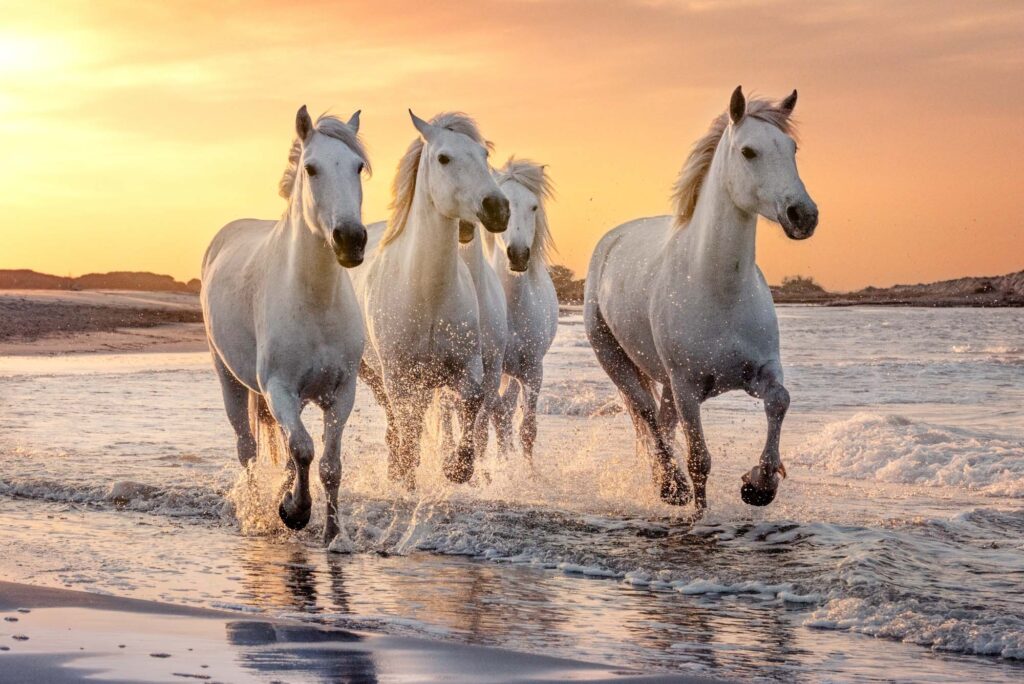
The White Horses
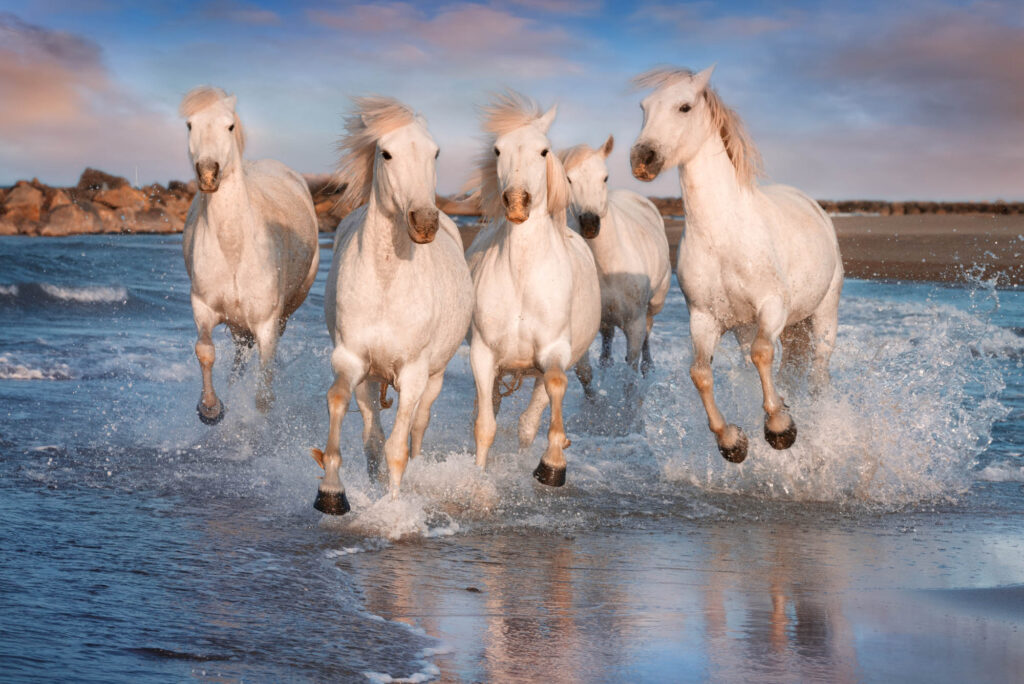
Of course, one of the first things that comes to mind when you hear Camargue is the white horse. These horses are one of the best-known symbols of the region, and seeing them moving through the marshes is a big part of the experience. The local horsemen, known as the “Guardians of the Camargue”, have cared for these animals for generations, and the horses remain closely connected to the traditional life of the region.
For photographers, the horses provide plenty of opportunities to experiment. When they begin to run through shallow water, you can work with a fast shutter speed to freeze the movement and capture the water spraying from their hooves. You can also slow things down and allow some motion blur into the photograph, giving a completely different feeling to the same scene.
And then there are the moments when the horses simply stand together in the landscape. Sometimes you don’t need to photograph the action. The wide-open marshes, the horses, and the changing light can make a wonderful photograph on their own.
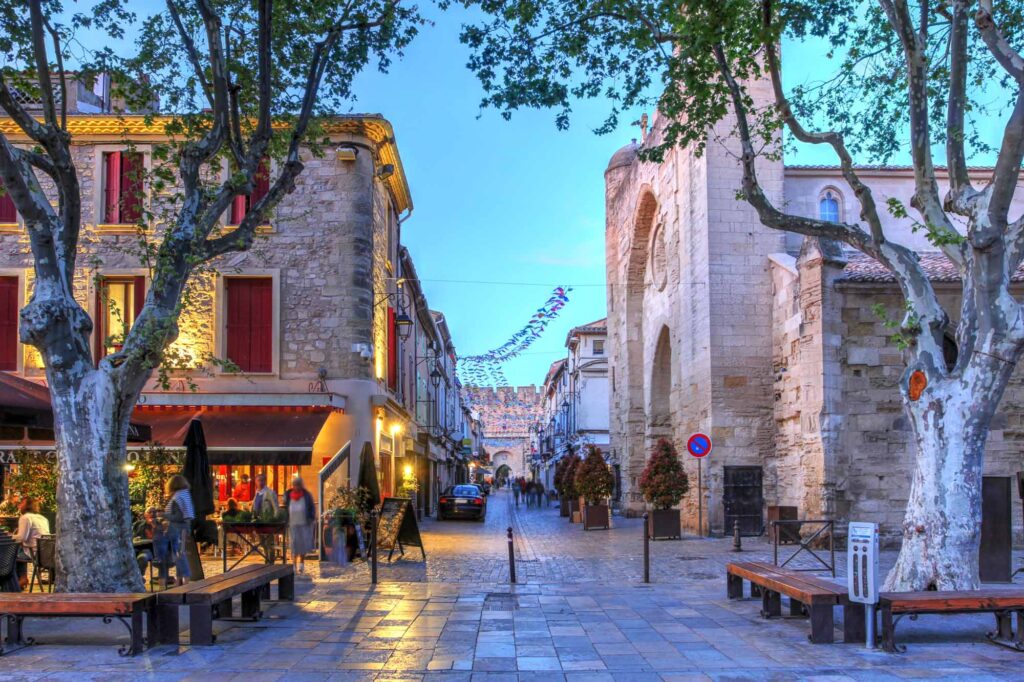
Aigues-Mortes
One of the more surprising things about the Camargue is that this vast natural landscape is also home to Aigues-Mortes, a beautifully preserved medieval fortress town.
The massive walls and towers of the town rise above the surrounding landscape, creating a striking contrast with the flat wetlands and salt marshes around it. The town has a long connection with French history and the Crusades, and walking through its streets gives you a completely different perspective on the region.
There are plenty of photographic opportunities here, from the stone walls and historic streets to the views looking across the surrounding countryside. The walls also become particularly interesting when you photograph them from a distance, where you can show just how dramatically they stand out against the landscape.
This contrast is one of the things that makes Aigues-Mortes so interesting. You have this ancient fortified town surrounded by a landscape that feels almost completely open, and within a short distance you can go from photographing medieval architecture to photographing wild horses and birds.
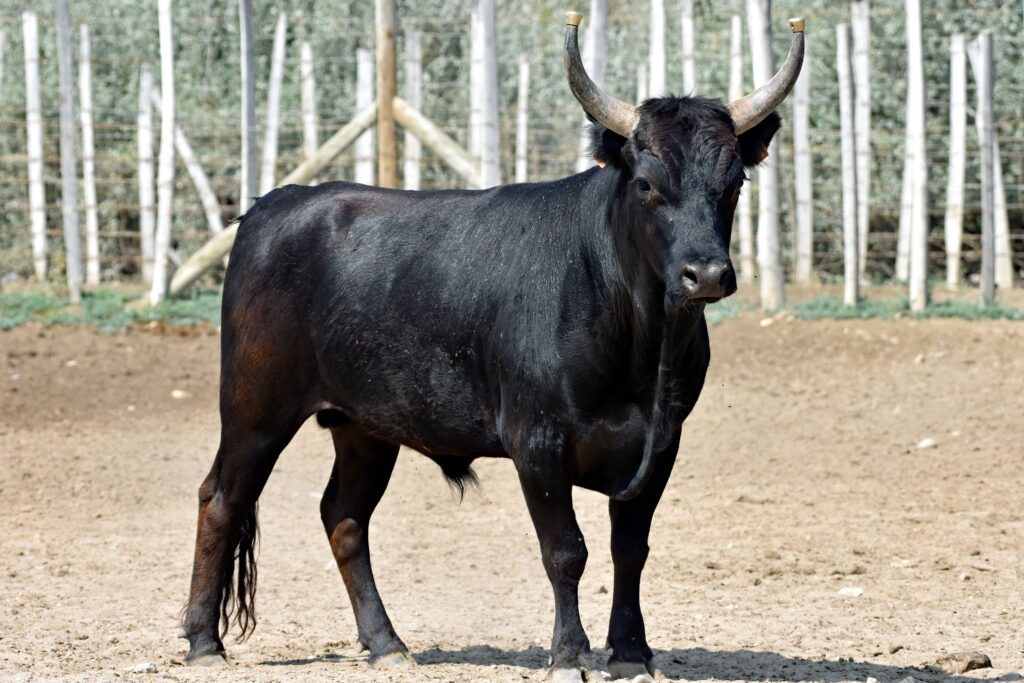
The Bulls of the Camargue
The Camargue is also home to its famous black bulls, another important part of the region’s traditional culture. The bulls are quite different from the horses as photographic subjects. They have a strong presence, and photographing them gives you an opportunity to concentrate on details, expressions, movement, and the relationship between the animals and their surroundings.
The tour includes a dedicated session with the Camargue bulls in a controlled setting, giving photographers the chance to work more deliberately with light and composition.
This is especially useful if you enjoy photographing animals but want to try something different from the usual wildlife experience. Rather than simply waiting for an animal to appear, you can spend more time thinking about how you want to frame the photograph and what story you want the image to tell.
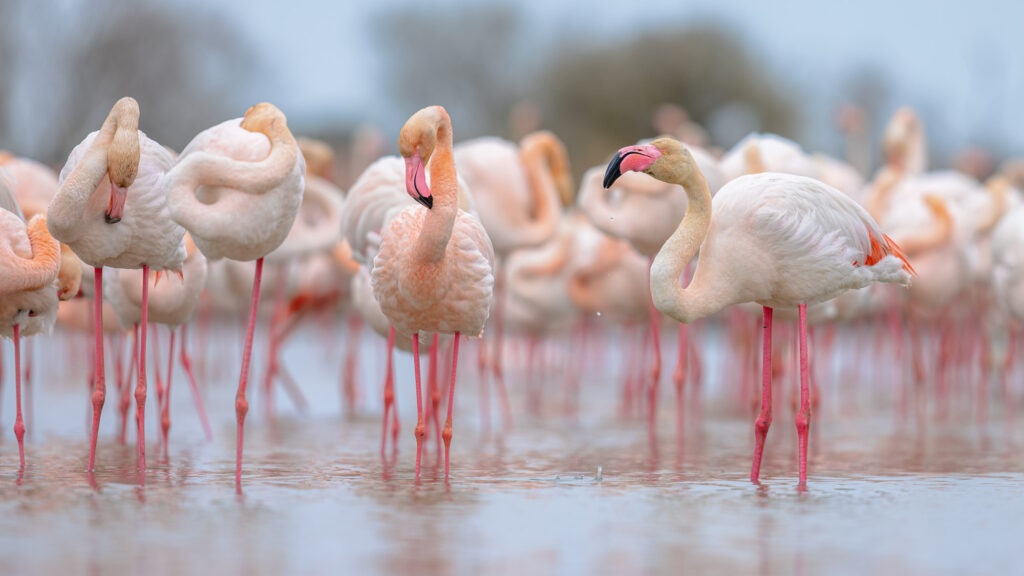
Flamingos At Pont De Gau
And then there are the flamingos. The Camargue is an important wetland habitat, and the Pont de Gau ornithological park provides an opportunity to get close to the region’s birdlife. Flamingos are perhaps the most recognizable subjects, but they are not the only birds you can find here.
Photographing them can be surprisingly varied. You can concentrate on a single flamingo and create a detailed portrait, or step back and photograph a large group moving through the wetlands. When birds take flight, you suddenly have an entirely different scene to work with.
This is also a good place to practice patience. Wildlife photography is often about waiting for something to happen, and sometimes the photograph you have in mind at the beginning of a session is completely different from the one you end up making.
You might arrive looking for a close-up portrait and leave with a wide photograph of dozens of birds flying across the landscape.
The Pink Saltworks
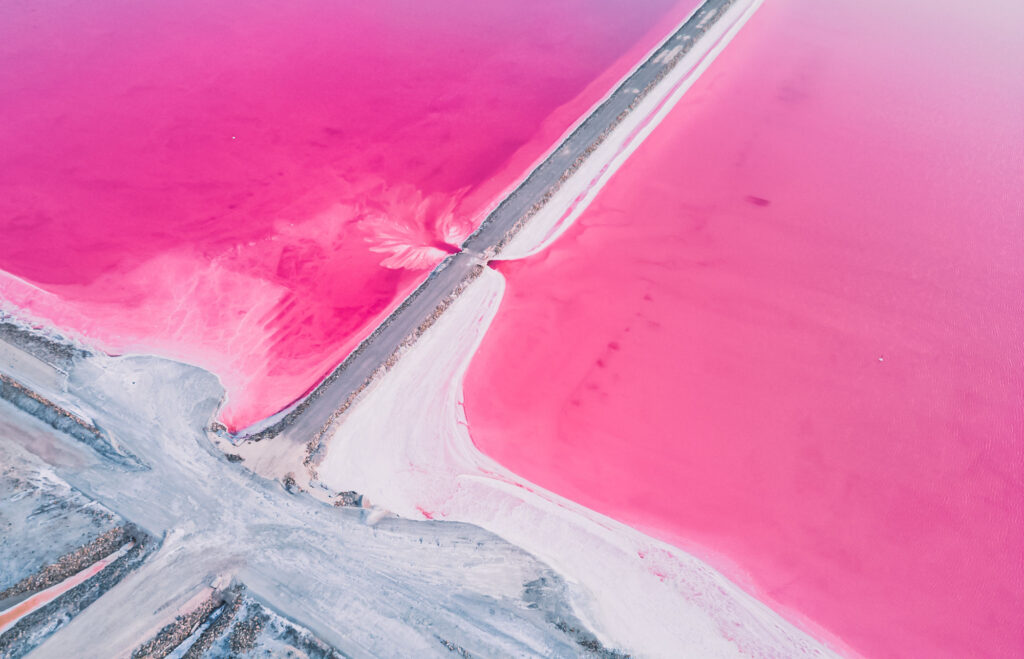
Another side of the Camargue can be found around the Aigues-Mortes saltworks. The large salt ponds create striking shapes and colors across the landscape, with some of the water taking on pink and reddish tones. From the ground, the saltworks already provide interesting compositions, but from above the patterns become even more impressive.
This is where photography in the Camargue becomes less about wildlife and more about color, shape, reflection, and perspective. The geometric patterns of the ponds give you something completely different to photograph from the animals and medieval architecture found elsewhere on the trip.
The saltworks can also be photographed alongside the historic walls of Aigues-Mortes, creating an unusual combination of natural color and centuries-old architecture.
It is a good reminder that you don’t have to photograph an animal to capture what makes the Camargue special.
Camargue is More Than a Photo Tour
It would be easy to describe the Camargue simply as a destination for photographing white horses and flamingos. Those experiences are certainly a big part of the attraction, but they only tell part of the story.
The region has its own culture, history, wildlife, and landscape, and that is what makes spending several days here so interesting. You are not simply moving from one photography location to another. You are seeing how all these different elements fit together.
Our four-day Camargue Photo Tour is designed around that variety, with a small group of only four to six guests and a professional photographer and guide. The experience includes the white horses, Camargue bulls, Aigues-Mortes, the saltworks, and the bird sanctuary, along with photo walks and discussions throughout the trip.
You also don’t have to be a professional photographer to enjoy it. Beginners, amateurs, enthusiasts, and semi-professional photographers are welcome, and camera phones are welcome too. Non-photographers can also join the experience.
The Camargue is simply a different way to experience southern France. There are no mountains dominating the horizon and no long list of famous cities to tick off. Instead, there are marshes, salt ponds, old stone walls, horses, bulls, flamingos, and a landscape that changes with the light.
And that may be what makes it so interesting. You come for the white horses. You stay for everything else.
Note: This tour is designed to be a stand alone photo tour or can be an add-on to our South of France – Côte d’Azur or Provence photo tours.