Kerala: The Country Within a Country
However many times you’ve traveled through India, or even if this trip is your first, Kerala tends to catch people off guard. Set along the southwestern edge of the Indian peninsula, this narrow ribbon of a state doesn’t quite behave like the rest of the country around it. The landscape turns unexpectedly lush, and everything from the food to the festivals starts to feel like its own tradition entirely.
Locally and officially, it’s known as God’s Own Country, a nickname that grew out of an old belief that this stretch of coast was once set aside for the divine, and one that Kerala’s tourism board later turned into its calling card.
Come and see it for yourself. Kerala has a way of staying with you long after the trip ends.
Why Kerala Feels Like Nowhere Else in India
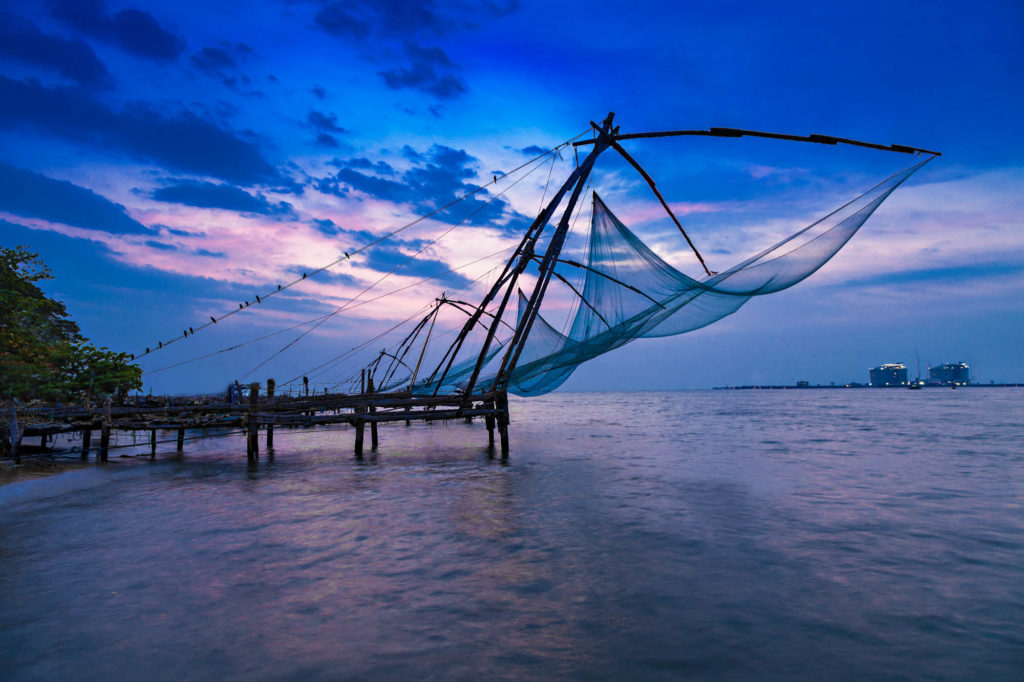
Kerala has it all, and in miniature, that’s the astonishing part. Within a single state you’ll find the misty tea-clad hills of Munnar, some of the best-kept beaches on India’s coastline, and a network of palm-fringed backwaters unlike anything else in the country. Along the coast at Fort Kochi, giant cantilevered fishing nets, introduced, according to local history, by Chinese traders centuries ago, still swing out over the water at dusk, lit by lamps to draw the catch in. Every corner of the state is green, unhurried, and quietly restorative.
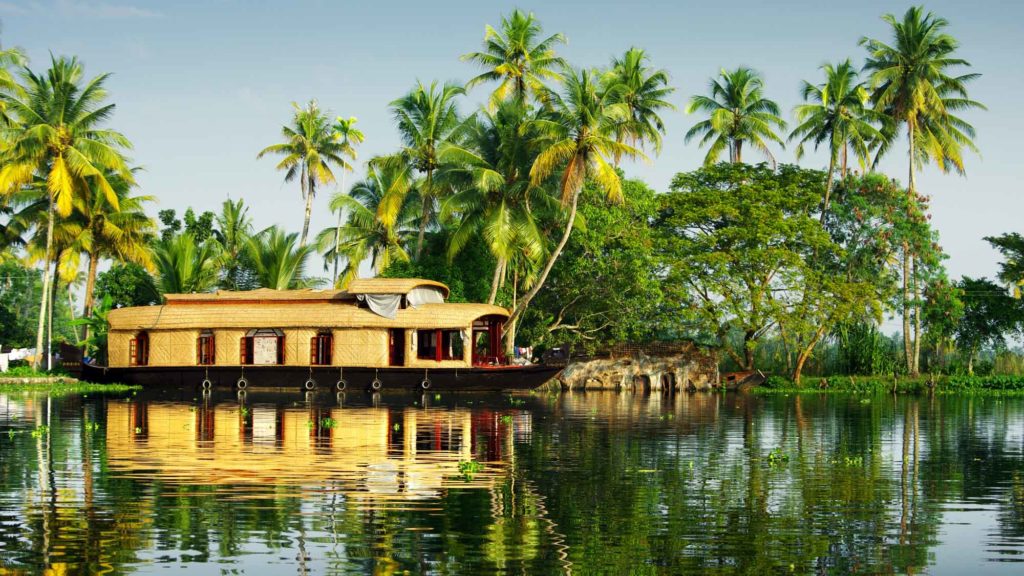
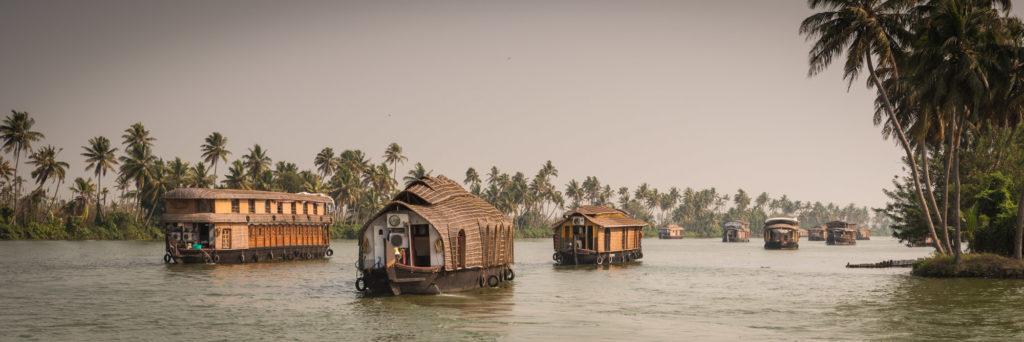
Alleppey anchors that landscape, its maze of backwaters has earned it the name “Venice of the East.” The houseboats drifting along these channels, called kettuvallams, were once working rice and grain barges before anyone thought to turn them into floating homes, and you can still see that history in the curve of their wooden hulls. Once a year, these same waters host Kerala’s snake boat races, where teams of over a hundred rowers move in rhythm to call-and-response chanting.
Everyday tradition holds its ground here too. Men wear the mundu, a simple white cloth wrapped and draped at the waist, while women’s kasavu sarees carry a border of gold that seems to catch light everywhere from temple courtyards to roadside markets. Out past the towns, spice farms open their gates to visitors curious about how cardamom—long called the “queen of spices”, and pepper, once traded as “black gold,” actually grow.
A Taste of Heritage
None of Kerala’s classical art forms have been retired to a museum case. They’re still taught by hand, still performed for real audiences, still passed down the old way. Kathakali and Mohiniyattam, the state’s two best-known dance traditions, dress their performers in costumes and hand-painted facial makeup so elaborate that they practically compose the photograph for you before you’ve even raised the camera.
Kalaripayattu belongs in that same conversation—it’s counted among the oldest martial arts still practiced anywhere in the world. One well-worn legend traces a line from Kalaripayattu all the way to Shaolin Kung Fu and, eventually, karate, carried across by a wandering monk named Bodhidharma; most historians treat that as folklore rather than settled history, but it’s the kind of story that makes watching a training session that much more compelling. And the sessions themselves need no embellishment—practitioners ranging from children to grandparents move through the forms with a control that looks closer to dance than combat.
That same continuity holds in the hills. The high ranges above Munnar are home to the Muthuvan, one of the oldest indigenous communities in the Western Ghats, whose settlements and way of life have persisted largely unchanged despite the tea plantations that grew up around them over the last century.
A Feast on a Leaf
Kerala’s food carries the same layered history as everything else here. A traditional sadya—the vegetarian feast served at weddings, festivals, and the Onam harvest celebration—arrives entirely on a fresh banana leaf, with two dozen or more dishes laid out in a specific order said to follow Ayurvedic logic, right down to which corner the pickle goes in. Coconut runs through nearly all of it, grated into stir-fries, pressed into milk for curries, cold-pressed into the oil most food is cooked in.
Along the coast, the story shifts toward fish. Karimeen, the region’s pearl-spot fish pulled straight from the backwaters, gets marinated in spice and roasted inside its own banana leaf wrapper—a Kerala classic shaped by the seafood trade that’s moved through these harbors for centuries. And in the old toddy shops scattered through the backwater towns, spicy fried shrimp and thick fish curries are still served the way they always have been: unfussy, communal, and built around whatever came in that morning.
A Balm for the Body
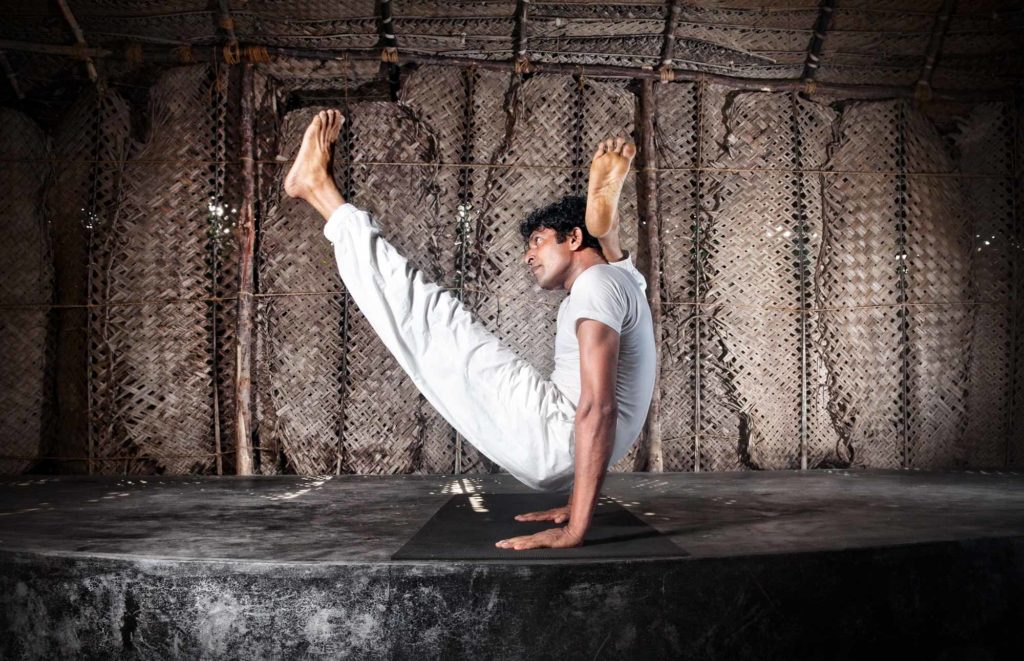
Ayurveda didn’t arrive in Kerala as a wellness trend—it’s been practiced here continuously for centuries, and the state remains the place most serious about doing it properly. Kerala was among the first in India to formalize an Ayurveda tourism policy, setting up a “Green Leaf” and “Olive Leaf” classification system so visitors can tell an authentic, physician-led treatment center from a spa borrowing the name. Institutions like the century-old Arya Vaidya Sala in Kottakkal still train practitioners for years before they touch a patient, and still grow the herbs used in their own formulations.
For visitors, that seriousness translates into something genuinely restorative rather than performative. Warm herbal oils, rhythmic full-body massage, steam treatments drawn from classical texts—the resorts built around this tradition know how to make ancient medicine feel like indulgence. Locals will tell you the monsoon months are technically the best time for deeper treatments like panchakarma, since the cooler, moisture-heavy air is said to open the pores and let the oils work more effectively. Even a shorter treatment, taken between days of travel, tends to leave people looser, calmer, and noticeably slower to reach for their phone. It’s one part of Kerala that’s easy to underestimate on paper and hard to skip once you’re there.
Join Us in Kerala
We’re heading back to God’s Own Country, Kerala (February 24 – March 7, 2027). With our small group departures, expect an itinerary built for photographers—golden-hour backwaters, spice trail walks, portrait sessions with Kathakali performers, and the kind of unhurried pace that lets you actually see the place you’ve come to photograph.