The White Horses of the Camargue
Story by Laurie Cohen
Many years back, when my part-time home was in the city of London, I would often drive south and catch a ferry to visit France, Spain and Portugal with the aim of quenching my never-ending thirst for discovering and exploring new locations. In those days, London was a temporary refuge from the monsoon months of Rajasthan, India – my home for most of the year with my brother and partner in crime.
As we would return to the U.K for 3 months each year, our mission was to buy the cheapest pile of junk on 4 wheels to get from A to B. As long as it would survive the 3 months until our return to India, we would be happy. Most of these cars would end up in a salvage yard on the way back to the airport. How any of these cars were able to climb the Spanish Pyrenees boggles my mind.
Alas, it was on one of these excursions that fate caught up to me while driving a particularly ugly Vauxhall Corsa in a remote rural area of southern France. It was here that the car decided it had found it’s final resting place. To cut a long and arduous story short, I decided to rent a vehicle from the nearest town and scout the area while the vehicle was under repair.
It was this experience that brought me to the Camargue National Park. In stark contrast to the chic and elegant coastal towns of the French Riviera, the windswept flatlands and marshes of the Camargue was an unexpected surprise. As I had a couple of days to spare until my car was fixed, I decided to explore the area by checking into a hotel in the town of Arles – well known for the inspiration of many works created by Vincent Van Gogh, and a hub of French art, this Provincial Roman town was a delight in itself. As I was already familiar with Arles, I decided to explore some of the coastal regions by venturing further south.
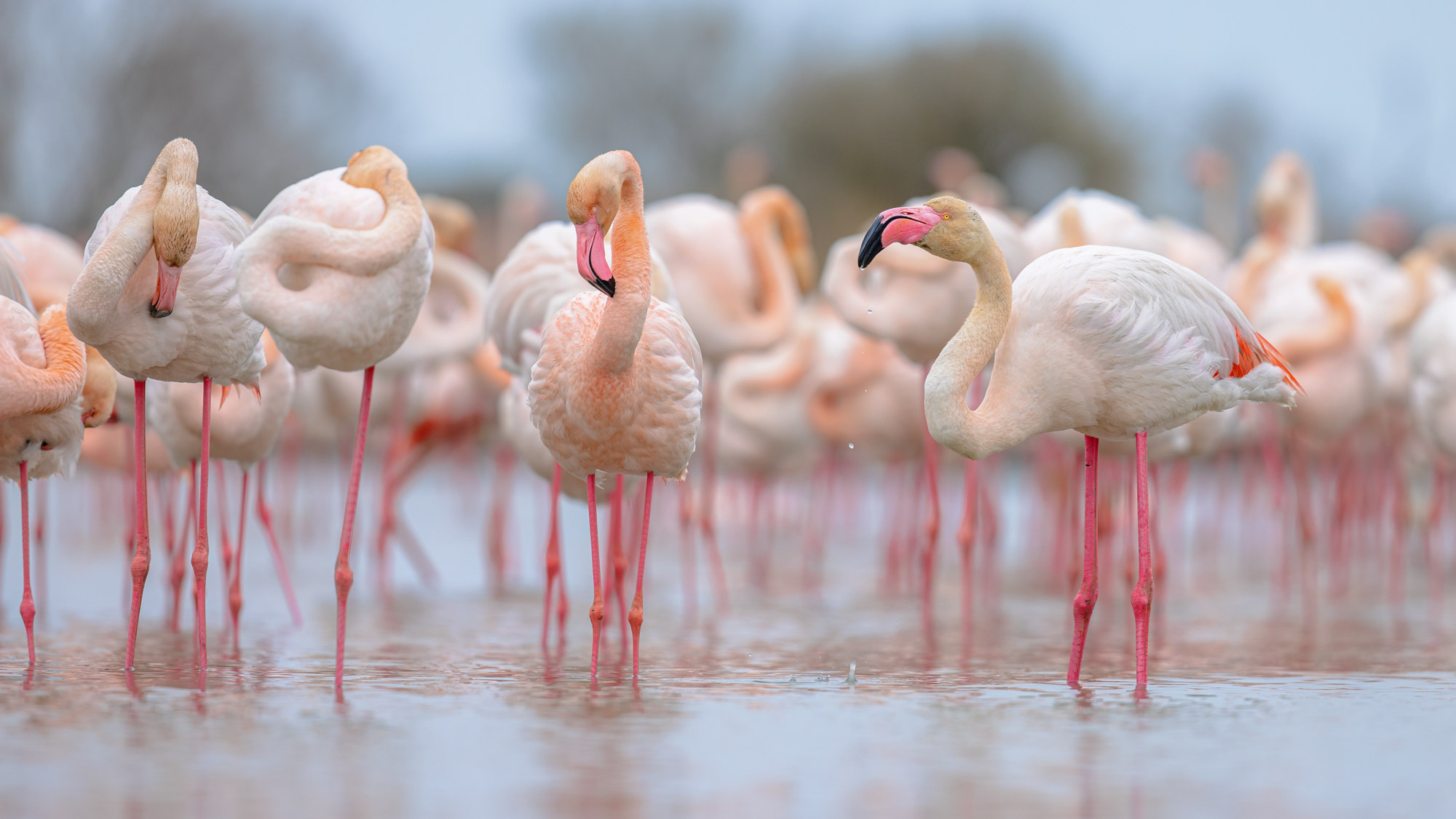
As I drove south alongside the Rhone river towards Port-Saint-Louis-du-Rhone, I passed through wetlands that seemed to continue for miles. Birdlife was everywhere, and I was delighted to see flamingos gliding above. I would pass through very simple villages along the route, and enjoyed simple yet excellent local cuisine on arriving to Salin-de-Giraud, a coastal village where I was amazed to see pink coloured lakes that I discovered were created from pigmentation of microscopic algae that exists in water with very high salt content. Witnessing pink flamingos landing on this pink water was a totally unexpected find.

This was a prime example of exploring in the days where Google maps, Waze, the internet and smartphones had yet to arrive. I remember when I would drive on a highway in a foreign country, with a map spread open on the dashboard, and be able to arrive to my destination. It makes me wonder how complacent we have become due to the advance of technology. Had it not been for reading a magazine article about a famous gypsy pilgrimage to the Camargue, I may have never discovered it.
The marshlands of the Camargue region is a labyrinth of flat, winding wetlands, set in a windswept region that is a visual treat for landscape and nature photographers. Though I also envisioned excellent photo opportunities for environmental portraits of a genuinely authentic people. I came across some of these authentic locals when I became acquainted with some French cowboys in a local bar. I didn’t know that such people existed in France. As I experienced the effects of a few too many local beers with them, they took me to visit the distinctive horses that their livelihood revolves around.

Through a mix of French, English, Spanish and alcohol induced gibberish, communication with these cowboys was as amusing as it was confusing. As the afternoon approached, they invited me to witness part of their daily life, consisting of rounding up cattle on horseback. I learned that these black Camargue bulls were used in local bullfights. Unlike Spanish bullfights, where a Matador would taunt and eventually kill the bull, the Camargue bullfights consist of collecting ribbons and rosettes from the bull’s horns as they charged.
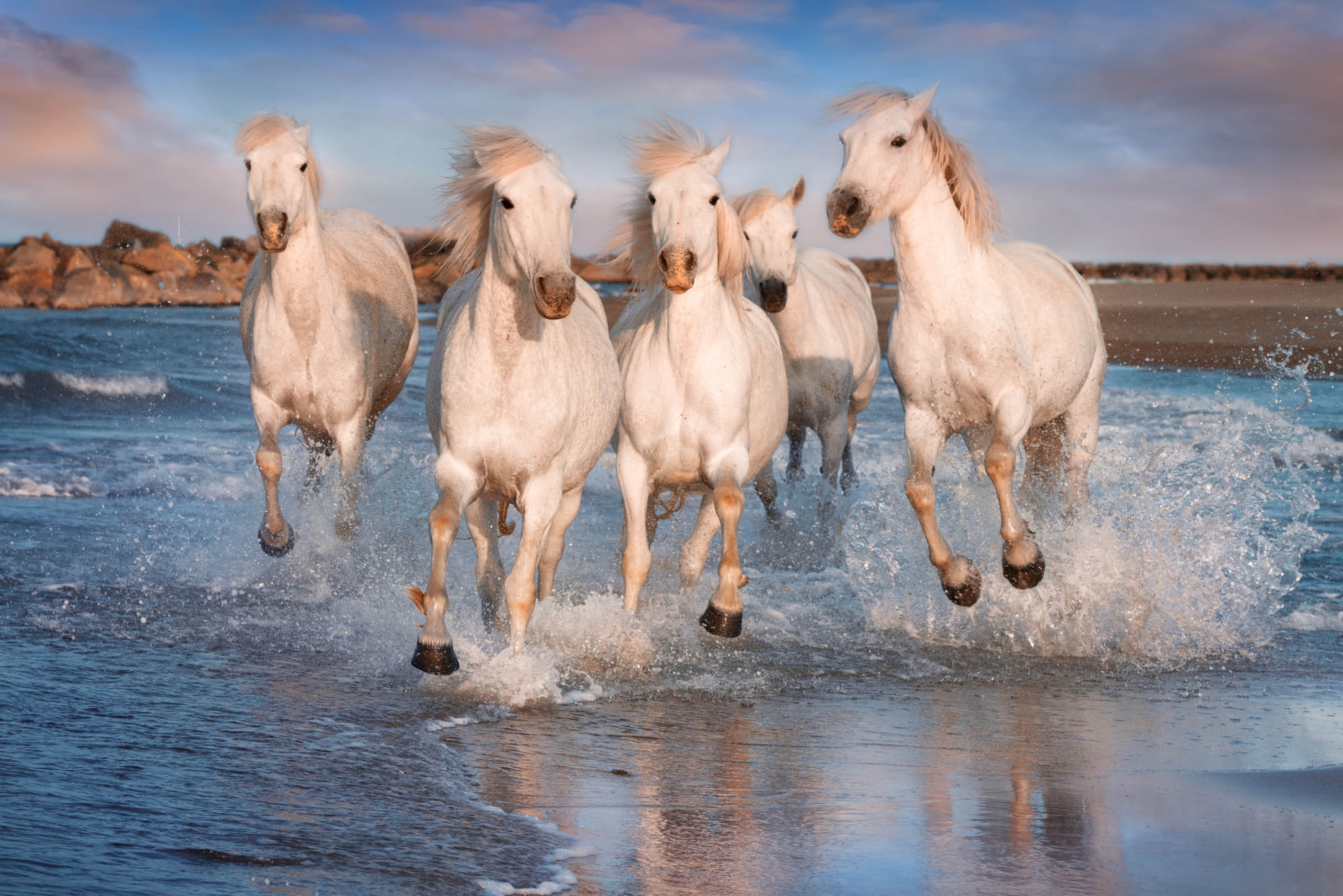
But it were the horses that really intrigued me. Semi-wild, and now used by the cowboys for herding, this local breed of horse are some of the oldest in the world. The Camargue white horse is an ancient breed, thought to have wandered the marshes and wetlands of southern France for thousands of years. Some experts believe their ancestors go back as far as prehistoric times, with links to early horses painted in the caves of Lascaux. The Camargue horse has characteristics similar to those of the primitive horses and the Barbe horse.

Fully grown, they are smaller and have heavy set limbs and a larger head compared with many other horse breeds. I learned that they have a dark coat when they are fouls, and develop an almost white coat as they grow into adults. Looking at their form, it is obvious that they are highly adapted to their environment. After they initially lived with total freedom, history shows evidence of them used as a pack horse and then as a war horse by the Roman legions.
As the day came to a close, I was fortunate to witness the energy and vitality of the beautiful white Camargue horses charging through a marsh – a scene that I felt privileged to watch. I felt that this was one of the few exceptions where humans had not caused a negative impact on nature.
As for the fate of the car, the estimate for rebuilding a gearbox was more than the car was worth. It’s last days were spent in a French salvage yard.